
Starting out
Your first 100 sauna members
The build is the easy part. Across 62 saunas built and 40 operators running, the question every new operator asks is the same: where do the first hundred regulars come from? This guide follows Donna of Island Sauna Shack, who launched a horsebox sauna on the Isle of Mull and made back what it cost in six months, with the numbers and words of other operators beside her.

The British Sauna Society recommends Sauna Box by name.
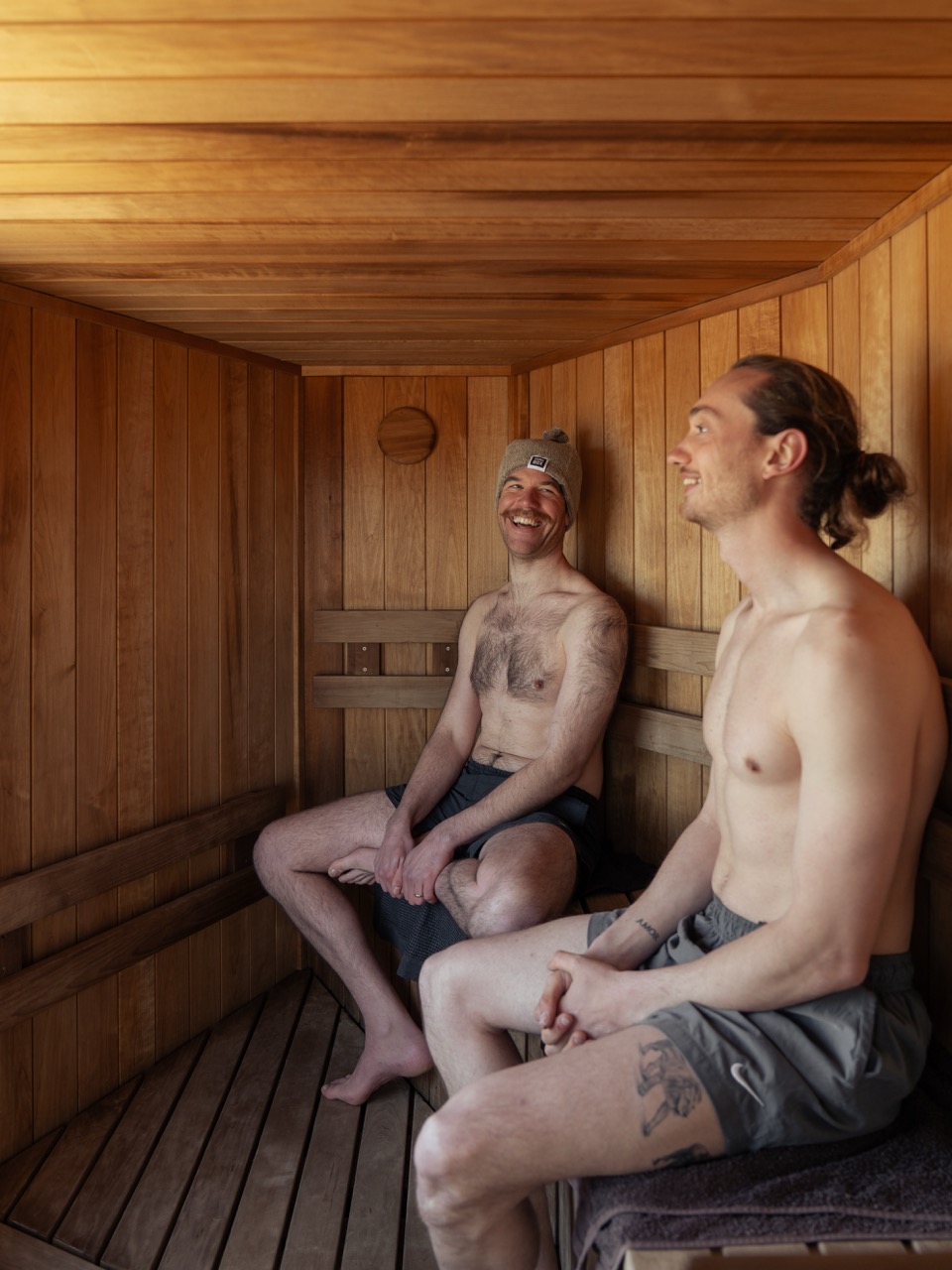
Launch week: give it away first
Donna launched on “one of the worst weekends in April, weather wise”, and she launched free. “We did an open weekend, put it out there on social media and we just said, come along.” No ticket, no upsell, just towels and disclaimers. The point was not revenue. The point was that nobody on the island had ever gone from hot to cold before, and the fastest way to explain a sauna is to put someone in one.
She backed the open weekend with an early sign-up offer on block bookings. “Promotions are really, really good early doors,” is how she puts it. Then she opened right as the season started, and watched the bookings come through.
The pattern to copy: a free open weekend to get the word out, one simple early-bird offer to turn visitors into repeat bookings, and a launch timed to when your site is busiest.
We did in a total, it was only about seven hours worth of free sessions. But it was just to get the word out because there was nothing here like that.
Community channels beat advertising
Donna's regulars did not come from ads. They came from groups that already existed and needed somewhere to meet: men's mental health groups, menopause groups, sister circles. The local paper ran a story too, not about the sauna but about Ed, and why a veteran would choose to do something good for his mental health. That article did more than any campaign could.
Amelia of Ojas Sauna found the other side of the same coin: people were already looking. “In the first couple of months, when I asked people how they found me, they said that they were searching sauna near me on Google Maps.” Claim your Google Maps listing before you spend a pound on anything else.
And then there is simply being seen. Visitors watch the smoke rise, try a session, and, in Donna's words, “It all has that ripple effect, doesn’t it? You just need that one time.”
We’re really lucky, but we’ve worked with male mental health groups on the island, menopausal groups, sister circles. Just so many different groups of people that just wanted a safe space to be that wasn’t the pub or a community center, just somewhere different.
What actually fills a sauna: the numbers
Our own enquiry records say the same thing the operators do. Across 931 enquiries in our books, here is how each channel converted:
- Word of mouth: around 15% became customers.
- Instagram: around 13%.
- Search (Google and the like): around 17%.
- Cold marketing campaigns: between 0% and 7%, and the coldest of them converted nobody at all.
Warm beats cold, every time, by a distance. A person who was told about you by a friend, or who went looking for you, is worth more than ten people you interrupted. For a new sauna that means: make the first hundred sessions so good that people talk, be findable when they do, and spend your energy on the groups around you rather than on ads.
Memberships vs drop-ins
Most operators run a mix, and the mix matters less than people think at the start. Donna sells drop-in sessions and block bookings; her early-bird offer was on blocks precisely because a block turns one good first visit into a habit. Her regulars are the community groups. Her drop-ins are the visitors: “In terms of visitors, we have people coming over here just for the day to use the sauna. So they are willing to get on a ferry, come use it and go again.”
What makes both work is that the session is cheap against how good it makes people feel. Nobody haggles: “No one’s come out ever saying, I wish I hadn’t done that. What a waste of my 55 minutes. Or 16 pound.”
At the venue end of the scale, Ra and Oscar of The Pink Sauna price by the day rather than the seat: “We target about 500 pounds for a weekend day for Saturday and then a Sunday.” Start with simple drop-ins, add a block or membership offer once you know your regulars by name, and let the diary tell you the rest.
No one’s come out ever saying, I wish I hadn’t done that. What a waste of my 55 minutes. Or 16 pound.
Winter: the season that surprises people
New operators worry about winter. The operators who have been through one do not. Donna's busiest slots hold steady all year, and off season she simply concentrates the diary: “We opened Friday to Monday, so Friday, Saturday, Sunday, Monday, they were the cluster days and they were worth opening every time.”
Winter is also when the product is at its best. “Dark nights, the fire crackling inside, no music. Beautiful,” is how Donna describes the off-season feed of the fire.
The money holds up too. Ra and Oscar's weekend takings at The Pink Sauna: “I don’t think we’ve dropped below £900 for a weekend the whole year.” The whole year, not the summer. Cold weather is not the enemy of a sauna business. It is the reason it exists.
Friday nights are super busy and Sunday afternoons, whether it’s during season or off season, they stay the busiest.
What they wish they'd known
Asked what someone thinking about it should consider, Donna's first answer was two words: do it. Her second answer was about staffing, the thing that quietly decides whether the diary you fill stays filled: “If you’ve got no staff, it can’t work.” She and Ed knew from day one that the two of them would run it, and that certainty made everything else simple. Work out who is going to run yours before you commit, not after.
Her more practical advice: “Make sure that you have a really good set of waterproofs.” Running a sauna outdoors in Britain means weather, every week, all year.
Amelia's advice is about the start line: “The best thing is genuinely just getting started and it sounds easier said than done.” And Donna's verdict, six months after making back what the sauna cost: “It’s been the best business decision we’ve ever made and I’m so glad that we did it.” Read Donna's story, or start with how to start a sauna business.
If you’ve got no staff, it can’t work.
Frequently asked questions
How do sauna operators get their first customers?
The operators we work with launch with a free open weekend to get the word out, back it with one simple early-bird offer on block bookings, and reach the community groups that already exist nearby. Donna of Island Sauna Shack gave away about seven hours of free sessions on launch weekend and the bookings kept coming from there.
What marketing actually works for a new sauna business?
Warm channels. Across 931 enquiries in our records, word of mouth converted at around 15% and search at around 17%, while cold marketing campaigns converted at between 0% and 7%. Claim your Google Maps listing, make the first sessions worth talking about, and work with local groups rather than paying for ads.
Should a sauna sell memberships or drop-in sessions?
Most operators run a mix. Drop-ins serve visitors and first-timers; block bookings and memberships turn a good first visit into a habit. Start with simple drop-ins, add a block offer once you know your regulars by name, and let the diary tell you the rest.
Is winter a bad time to run a sauna business?
No. Donna's busiest slots, Friday nights and Sunday afternoons, stay the busiest in season and off season, and The Pink Sauna's weekend takings never dropped below £900 all year. Off season, operators concentrate the diary into the days that are always worth opening.
Get started
Picturing your own first 100?
Tell us where you are and what you're imagining. We'll tell you honestly what a sauna could do there, and introduce you to operators who started exactly where you are.
Tell us what it’s for and we’ll point you to the right next step.