
Buying guide
Wood-fired or electric: which sauna heater is right for you?
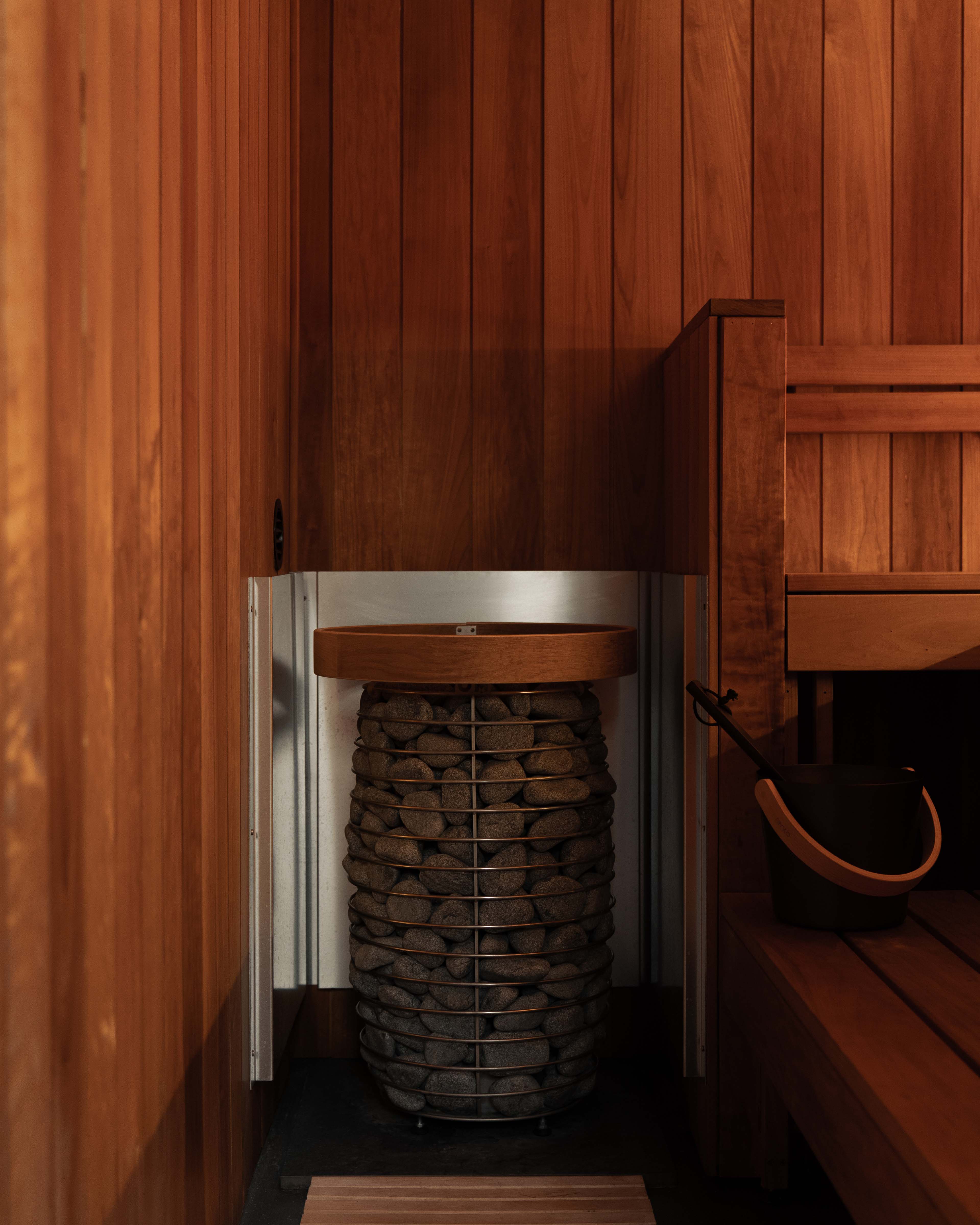
Every sauna we build comes with a Narvi heater as standard, and a choice: wood-fired or electric. Both heat the room properly and both let you pour water on the stones. The difference is in what your site has, what it costs you each day and how much of the work you want to do by hand. Across 62 saunas built, Tom's answer is simple: if there's mains power, go electric; if there isn't, wood-fired is what makes the site possible at all. Here is how to tell which you are.

The short answer
Choose electric if your site has a mains supply that can take it. It heats up faster, needs no firewood, no one has to feed it, and you can set it on a timer. In a commercial setting that makes it far easier to manage, which is why it's what we recommend.
Choose wood-fired if there is no power where the sauna will sit: a beach, a field, a lakeside, an event. It runs completely off grid. It is also the more traditional, romantic option, and some people choose it for exactly that.

Anything you do, if there’s electric available, I would just go electric. That’s my rule.
What an electric heater needs
An electric sauna heater is a big load, so the supply matters more than anything else. These are the heaters and supplies we fit:
| Build | Heater | Supply |
|---|---|---|
| 10ft container sauna | 9‑10kW | 3 x 16A three-phase, or 40A single-phase |
| 20ft container sauna | 20kW | Two circuits, 3 x 16A and 3 x 25A, three-phase only |
So a 20ft electric sauna needs a three-phase supply; a 10ft can run on single-phase if the site can give it 40A. Ask your electrician what your supply can take before you choose. If the answer is no, wood-fired is the way round it.
What it costs to run
Electric. A heater runs at full power while it heats up, then at about half to hold the temperature. So for a 4-hour session with a 1-hour heat-up, at 25p a kWh:
- 10ft container sauna: 10kW x 25p x 1 hour, plus 10kW x 25p x 4 hours x 50%, comes to about £7.50.
- 20ft container sauna: 20kW x 25p x 1 hour, plus 20kW x 25p x 4 hours x 50%, comes to about £15.
Put your own tariff in place of the 25p and the sum still works.
Wood-fired. Budget about £25 of firewood for a long day in a horsebox sauna or 10ft container, and about £37 for a 20ft. Most of it goes on the heat-up. Buy kiln-dried wood from someone local and try a small bag before you order a load: damp wood smokes and can add the best part of an hour to the heat-up.
Either way, fuel is one line in the running costs. The rest is in what a container sauna costs to run.
Living with a wood-fired heater
A wood-fired heater needs someone to look after it. Lighting it is quick once you have the knack, and then it wants feeding: a refill after the first ten minutes, another after the next ten, then every fifteen to twenty minutes for as long as you are open. Keep the vent open at least a little while the fire is going, because the fire and the people both need the air.
It also needs a little upkeep that an electric heater doesn't:
- Every month: take the stones out and hoover under the little hatch. It does wonders for the draw.
- A chimney sweep: clean the flue, under the hatch and the firebox, and check the heater and flue for wear or damage.
- Smoke or soot on the rain cap usually means the flue liner has slipped up. When it's cold, lift the top section of flue off and slide the liner back level with the top, then get a sweep in.
Our video tutorials show lighting, feeding and looking after the fire step by step.
first 10 minutes refill, second 10 minutes refill, then you’re on about 15-20 minutes timer.
Which one for your site?
- A fixed site with mains power (a gym, a padel club, a hotel, a farm with a supply): electric.
- A beach, field or lakeside with no supply: wood-fired.
- A horsebox sauna going to events: usually wood-fired, because you can't count on a hook-up at every pitch.
- A 20ft container on single-phase power: wood-fired, or upgrade the supply first.
- You want the fire itself to be part of it: wood-fired, and plan the time to look after it.
Not sure what your site has? Start with what a sauna site actually needs, then talk it through with us.
Frequently asked questions
Is a wood-fired or electric sauna heater better?
If your site has a mains supply that can take it, electric is quicker to heat, needs no firewood, is easier to manage and can run on a timer. Wood-fired is the answer where there is no power, and the more traditional experience. Both let you pour water on the stones.
What power supply does an electric sauna heater need?
Our 10ft container sauna has a 9–10kW heater on a 3 x 16A three-phase or a 40A single-phase supply. The 20ft has a 20kW heater on two three-phase circuits, 3 x 16A and 3 x 25A, so it needs three-phase.
How much does an electric sauna cost to run?
At 25p a kWh, a 4-hour session with a 1-hour heat-up costs about £7.50 in a 10ft container sauna and about £15 in a 20ft. The heater runs at full power to heat up, then at about half to hold the temperature.
How much firewood does a wood-fired sauna use?
Budget about £25 of kiln-dried firewood for a long day in a horsebox sauna or 10ft container, and about £37 in a 20ft. Most of it goes on the heat-up, and dry wood makes a big difference.
Get started
Not sure which heater suits your site?
Tell us where your sauna will sit and what power is there. We'll tell you which heater makes sense before you commit to anything.
Tell us what it’s for and we’ll point you to the right next step.